
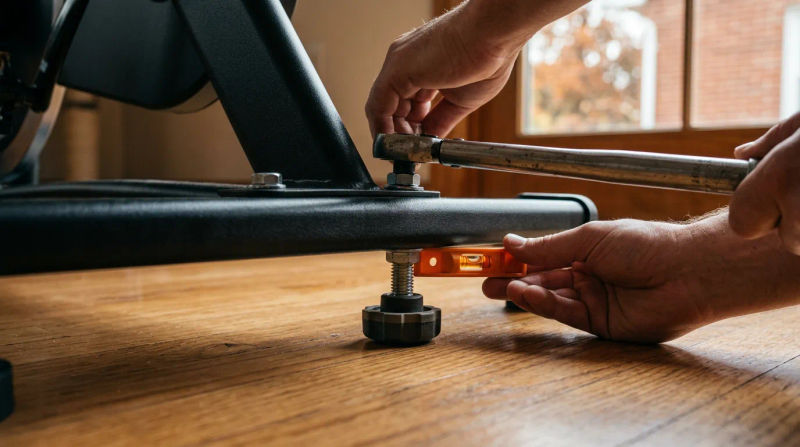
You’ve just unboxed your new stationary bike, excited to start a new indoor fitness routine as the October evenings get cooler and the leaves pile up outside. You spend an afternoon following the instructions, tightening bolts, and positioning it in your spare room. But when you hop on for that first ride, something feels off. There’s a slight side-to-side sway, a subtle rock that gets worse as you pick up the pace. That feeling of instability can be more than just annoying; it can be a sign of an underlying issue that could affect your workout and the longevity of your equipment.
As a specialist who has spent over a decade setting up and troubleshooting equipment in homes, I've seen this exact scenario play out many times. An exercise bike wobble is one of the most common complaints I hear, especially here in the Lancaster area. The good news is that it's almost always fixable. Let's walk through what might be happening.
Common Signs and Symptoms
The most obvious symptom is a side-to-side rocking motion when you pedal, particularly when you stand up on the pedals or increase your intensity. But the problem can manifest in other ways, too. Pay attention to these signs:
- A Rhythmic Clicking or Knocking Sound: This often syncs with your pedaling cadence. It might be subtle at first, but it's a tell-tale sign that a component is loose and shifting under pressure.
- The Bike "Walks" Across the Floor: During a vigorous workout, you might find your bike has shifted several inches from where it started. This indicates that the energy from your pedaling isn't being absorbed by a stable frame but is instead being converted into movement across the floor.
- Vibrations Felt Through the Handlebars or Seat: An unstable base will send vibrations up through the frame. If your hands feel tingly or the seat feels like it's buzzing, the bike isn't properly grounded.
- A Feeling of Being Off-Balance: You might feel like you have to constantly adjust your posture to stay centered on the bike. This can lead to an uncomfortable ride and even muscle strain over time.
If you're experiencing any of these, it’s a clear signal that your bike’s setup needs a closer look.
What Causes This Problem
An exercise bike wobble isn't just one problem; it's usually a symptom of one or more root causes. From my experience, it almost always comes down to one of these three areas: the assembly, the leveling, or the floor itself.
1. Common Assembly Mistakes This is, by far, the most frequent culprit. Modern exercise bikes are complex machines, and a single missed step in the manual can lead to instability. Some of the most common exercise bike assembly mistakes Lancaster homeowners run into include:
- Incorrectly Torqued Bolts: The most common issue is that the stationary bike bolts keep loosening. This happens for two reasons. First, they may not have been tightened enough during the initial assembly. Hardware needs to be torqued to a specific specification - too loose, and it will wobble; too tight, and you risk stripping the threads or damaging the frame. The vibrations from a wobbly bike will then cause these undertightened bolts to loosen even further over time.
- Improperly Seated Stabilizers: The front and rear feet, or stabilizers, are the foundation of your bike. If they aren't perfectly flush with the frame before the bolts are tightened, a tiny gap can create a pivot point, causing a wobble.
- Reversed Parts: It happens more often than you'd think. A stabilizer bar or pedal crank installed backward can throw off the bike's geometry and balance, leading to persistent instability.
2. Uneven Flooring Here in Lancaster, we have a wonderful variety of homes, including many classic 1950s Ranch-style houses. While these homes have incredible character, their floors - whether original hardwood, plush carpet, or a concrete slab in the garage - may not be perfectly level after 60+ years. Even newer homes can have subtle dips and rises in the subfloor.
- Carpet: Placing a heavy exercise bike on thick carpet is a recipe for wobble. The padding compresses unevenly under the bike's small feet, creating an unstable base from the start.
- Hard Surfaces: On hardwood, laminate, or concrete, even a minor imperfection in the floor becomes immediately obvious. If one of the bike's four contact points is sitting in a slight depression, the bike will rock back and forth.
3. Incorrect Leveling This ties directly into the flooring issue. Nearly all modern stationary bikes are designed to compensate for uneven floors. The key is knowing how to level exercise bike feet correctly.
Most bikes have adjustable feet, usually on the rear stabilizer and sometimes on the front as well. These are essentially large threaded feet that can be screwed in or out to change their height. If these aren't adjusted properly, the bike will not have solid, four-point contact with the ground, and it will wobble no matter how tight the bolts are. The goal is to adjust each foot until the bike's frame is perfectly stable and does not rock in any direction when you apply pressure to the handlebars and seat.
When to Call a Professional
Many minor wobble issues can be addressed with a little DIY spirit. Here are a few things you can try first:
- Check the Bolts: Go over every single bolt on the bike, especially those connecting the base stabilizers to the main frame. Use the tools that came with the bike and give them a firm tightening.
- Adjust the Leveling Feet: Place the bike where you intend to use it. Gently try to rock it side-to-side and front-to-back. Identify which foot is off the ground and unscrew it (turn it counter-clockwise) until it makes firm contact with the floor. Check again. Repeat until all rocking is gone.
- Use a Mat: If you're on carpet, a dense rubber equipment mat can create a more stable surface by distributing the weight more evenly.
However, there are times when it's best to call in an experienced professional. You should consider getting help if:
- You've tried the steps above and the wobble persists. This could indicate a more complex assembly issue or even a manufacturing defect.
- You hear grinding, cracking, or loud popping noises. These are not normal and could signal a serious mechanical problem or a stressed frame.
- You aren't comfortable with the initial assembly. If you're feeling unsure about whether you put it together correctly in the first place, getting a second opinion is a smart move for your safety.
- The bolts continue to loosen after you've tightened them. This may require a professional's touch, perhaps using thread-locking compounds or diagnosing a bigger vibration issue.
A wobbly bike isn't just an annoyance; it's a safety concern. An unstable machine can put undue stress on its own components and, more importantly, on your joints as you compensate for the movement.
Conclusion
That initial excitement for your new exercise bike shouldn't be ruined by an unstable and noisy ride. An exercise bike wobble is a clear sign that something in its foundation - the assembly, the leveling, or its interaction with your floor - needs attention. By checking your hardware and properly adjusting the leveling feet, you can often solve the problem yourself.
However, don't hesitate to seek expert help. Small issues left unaddressed can become bigger, more expensive problems down the road. Ensuring your equipment is assembled correctly and perfectly stable from day one is the best investment you can make in your fitness journey and your safety.
If you notice any of these signs, contact a local equipment assembler for an inspection.