
You’re clipped in, the instructor is counting down, and you rise out of the saddle for that first big push. But as you start to pick up the pace, you feel it - a slight side-to-side rock. At first, it’s a minor annoyance, but soon the exercise bike wobbling becomes a major distraction, pulling you out of the zone and making you question the stability of your machine. As an equipment specialist, I’ve seen this exact scenario play out in homes all across the Columbus area. Especially here in Dublin, as the cooler fall weather pushes our workouts indoors, these little issues become much more noticeable.
That wobble isn’t just annoying; it can be unsafe and potentially damaging to your bike or your floors over time. The good news is that in most cases, it’s a highly solvable problem. Let's walk through what to look for, what causes it, and how to get your ride back on solid ground.
Common Signs and Symptoms
An unstable exercise bike can manifest in a few different ways. While a side-to-side wobble is the most obvious sign, there are other subtle clues that point to an assembly or leveling issue. Keep an eye and ear out for these symptoms:
- A Rhythmic Knocking or Clicking Sound: Often, a wobble is accompanied by a noise that syncs with your pedal stroke, especially when you’re putting more force into the handlebars or standing up. This is usually the sound of a loose connection point or a leveling foot tapping the floor.
- Side-to-Side Sway: This is the classic wobble. You'll feel it most when you're out of the saddle, shifting your weight from one leg to the other. The handlebars might feel like they are rocking left and right.
- Front-to-Back Rocking: Less common but still possible, this feels like the bike is tipping forward or backward slightly as you ride. This often points to an issue with the front or rear stabilizer feet not making firm contact with the ground.
- The Bike “Walks” Across the Floor: Over the course of a workout, does your bike slowly migrate from its starting position? This movement is a direct result of the instability, as the bike’s motion translates into tiny shifts across your floor.
- Visible Gaps Under the Feet: Take a close look at the base of your bike. If you can see a visible gap between one of the stabilizer feet and the floor, you’ve found a primary source of your problem.
What Causes This Problem
Understanding the root cause is the key to a lasting fix. From my experience, an exercise bike wobbling issue almost always comes down to one of three things: the assembly, the floor, or the feet. It's rarely a defect in the bike itself.
- Improper Initial Assembly: This is, by far, the most common culprit I see. During assembly, the front and rear stabilizers must be bolted to the main frame. If these bolts aren’t tightened sufficiently or evenly, the entire foundation of the bike will be unstable. The manufacturer provides torque specifications for a reason - they ensure a rock-solid connection that can withstand the forces of an intense workout. A quick, “good enough” tightening with the included wrench often isn't enough. This is a frequent issue my team and I address during professional Dublin fitness equipment assembly calls.
- Uneven Flooring: Not all floors are perfectly level, and this is especially true in the beautiful, large homes common in Dublin. Many of the properties built in the 1990s and 2000s feature finished basements or bonus rooms with luxury vinyl, laminate, or hardwood floors. While these surfaces look great, they can have subtle dips or slopes that are unnoticeable to the eye but very apparent to a heavy piece of fitness equipment with a small footprint. Even a slight variation can leave one of the bike’s four contact points floating, creating a pivot point for the wobble.
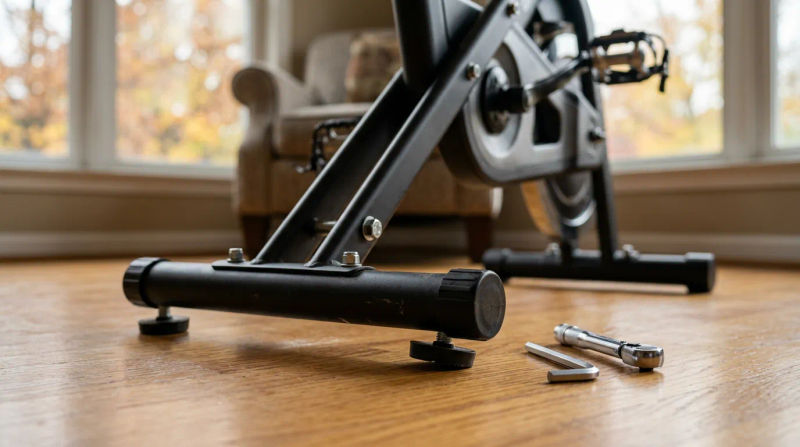
- Incorrectly Adjusted Leveling Feet: This is directly related to the uneven flooring issue. Your bike is equipped with adjustable exercise bike leveling feet for this very reason. These are the small, threaded feet on the bottom of the stabilizers that can be screwed in or out to compensate for an unlevel surface. Many people either don’t know they exist or don’t adjust them correctly. Simply placing the bike down and hoping for the best is a recipe for instability. Each foot needs to be adjusted until it makes firm, solid contact with the floor.
- A Compressible Mat: While a good quality, firm equipment mat is essential for protecting your floors, a mat that is too soft or spongy can introduce instability. As you ride and shift your weight, the bike’s feet can sink into the mat, creating a wobbly sensation similar to standing on soft sand. It’s important to use a high-density mat designed specifically for heavy fitness equipment.
When to Call a Professional
So, is this a DIY fix or is it time to call for help? Here’s how I help homeowners decide.
You can likely handle it yourself if:
- The wobble is minor and you just need to adjust the exercise bike leveling feet. This is a simple process: have a friend gently rock the bike to identify which foot is off the ground, then turn that foot counter-clockwise to extend it until it’s snug against the floor. Check all four feet.
- You have the original tools and feel comfortable checking the main stabilizer bolts. Go back and re-tighten the bolts that connect the front and rear feet to the frame. Make sure they are very snug.
You should consider calling a professional when:
- You’ve adjusted the leveling feet and tightened the bolts, but the wobble persists. This could indicate a more complex issue, like a slightly warped stabilizer or a hidden loose bolt that requires partial disassembly to access.
- You’re not comfortable using tools or are worried about over-tightening and damaging the bike. A professional has the right tools and experience to apply the correct amount of force without stripping bolts or cracking the frame.
- The bike is making mechanical noises (grinding, deep clunking) in addition to the wobble. This could point to a problem with the flywheel or drivetrain that was caused or exacerbated by the unstable frame.
- You're looking for a specific Peloton bike wobble fix and the standard adjustments aren't working. Sometimes, these premium bikes have unique connection points that benefit from an expert eye.
- You want the peace of mind that comes from knowing your expensive equipment was assembled perfectly from the start, ensuring safety, optimal performance, and longevity.
Conclusion
That wobble you feel during your ride is more than just a minor annoyance - it’s a sign that your bike isn't properly grounded. Ignoring it can lead to a less effective workout, potential safety issues, and premature wear on your equipment. The most common causes are almost always related to the initial assembly or improper leveling for your specific floor.
Take a few minutes to inspect the stabilizer bolts and adjust the leveling feet. Often, this simple check is all it takes to restore a smooth, stable ride. Don’t let a fixable problem derail your fitness routine, especially as we settle in for the season.
If you’ve tried these simple fixes and are still feeling unsteady, don't hesitate to contact a local professional. A qualified equipment assembler can quickly diagnose the root cause and ensure your bike is safe, stable, and ready for your next ride.